

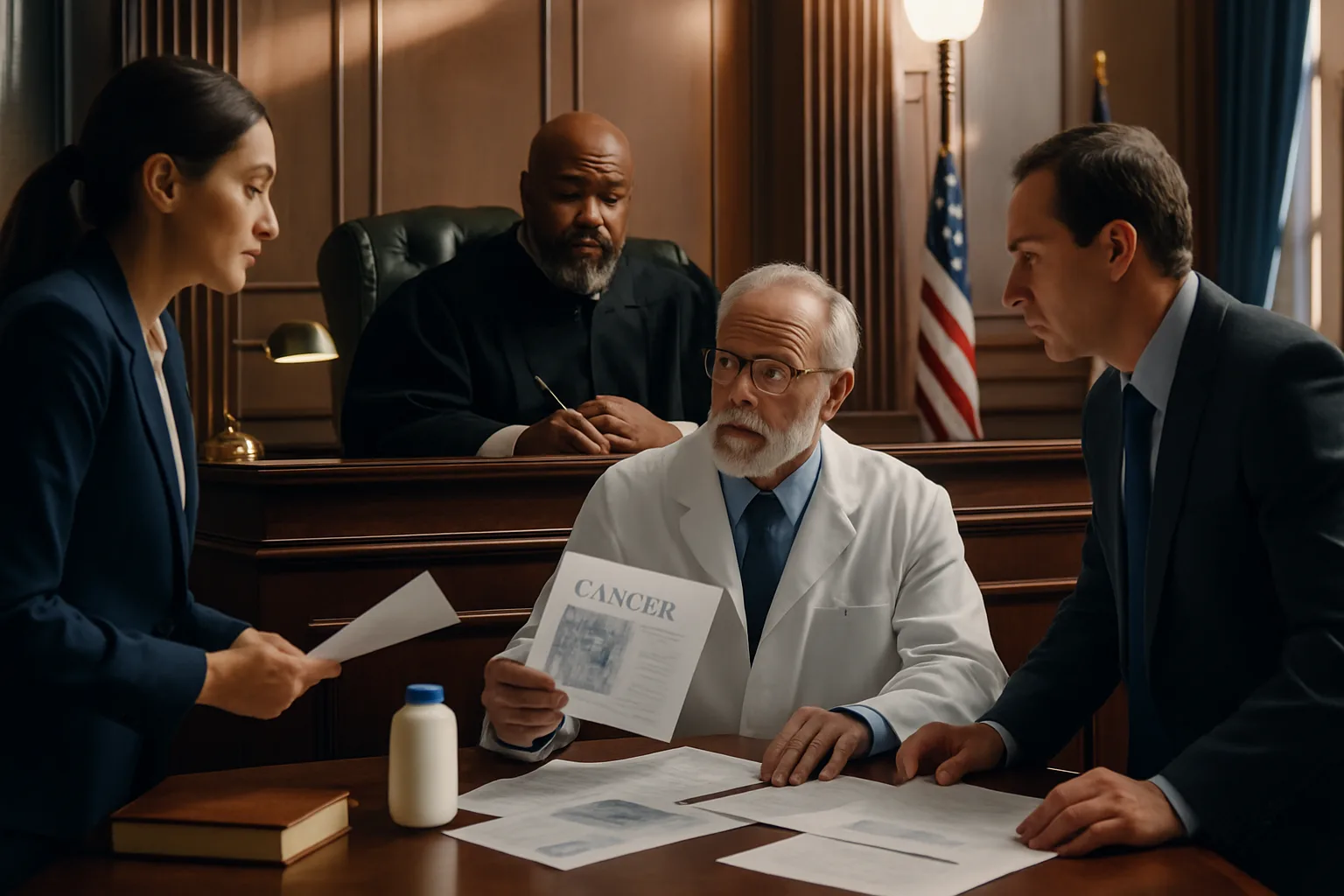
The Johnson & Johnson talc lawsuit has taken another dramatic turn after a federal judge in Virginia dismissed the company’s libel claims against three doctors tied to a 2020 talc cancer study. This legal setback intensifies public scrutiny of J&J’s talc products and the ongoing debate over their safety, particularly in cases involving mesothelioma talc exposure.
For decades, Johnson & Johnson has faced mounting litigation regarding its talc-based powders, with plaintiffs alleging links to cancer and other serious illnesses. The latest court decision not only underscores the complexity of cosmetic talc legal cases but also highlights the challenges companies face in contesting scientific studies that question product safety.
Background: The Johnson & Johnson Talc Lawsuit
Johnson & Johnson’s talc products, especially baby powder, have been household staples for over a century. However, since the 1970s, concerns have emerged about asbestos contamination in talc and its potential connection to cancer diagnoses like ovarian cancer and mesothelioma. According to Reuters, J&J has faced over 40,000 lawsuits related to talc product safety by 2023, with settlements and verdicts totaling billions of dollars.
The core issue centers on whether long-term use of talc-based products can cause cancer. Several studies, including the 2020 talc cancer study at the heart of this libel suit, have reported possible links between cosmetic talc and mesothelioma. Plaintiffs claim that J&J either knew or should have known about the risks, while the company maintains its products are safe and asbestos-free.
In response to the mounting legal pressure, Johnson & Johnson created a subsidiary, LTL Management, to handle talc-related liabilities. This move has drawn additional legal attention, with critics alleging it was designed to limit the company’s exposure to massive jury awards.
The 2020 Talc Cancer Study and the Libel Suit
In 2020, a peer-reviewed study examined the relationship between cosmetic talc exposure and mesothelioma, a rare cancer most often associated with asbestos exposure. The study suggested a potential link between regular talc use and increased cancer risk, fueling thousands of new lawsuits against J&J. The company’s talc unit responded by filing a libel lawsuit against the study’s three authors, arguing that their publication was misleading and damaged the company’s reputation.
However, the federal judge presiding over the case found that the company did not prove the doctors knowingly published falsehoods or acted with reckless disregard for the truth. Instead, the evidence pointed to the doctors’ apprehension about litigation, not malice or intentional deception. This outcome marks a significant defeat for J&J in its attempt to challenge unfavorable scientific research through litigation.
This case is just one example of how scientific research and legal battles are increasingly intertwined, especially when public health is at stake. The outcome may influence how pharmaceutical and consumer goods companies approach future disputes over product safety studies.
How Libel Lawsuits Intersect With Scientific Debate
Libel suits in the context of scientific studies are notoriously difficult to win. Courts often emphasize the importance of free academic inquiry and the need for honest, open debates about health risks. In the Johnson & Johnson talc lawsuit, the judge’s decision reflects a broader judicial reluctance to penalize researchers for expressing scientific opinions—unless there is clear evidence of intentional misinformation.
For J&J, the failed libel suit underscores the strategic risks of targeting scientists whose findings might support plaintiffs in cosmetic talc legal cases. The verdict also sends a message to researchers that engaging in controversial public health studies does not automatically expose them to successful defamation claims.
The interplay between science and the law is especially sensitive when dealing with products that touch millions of lives. Companies may wish to defend their brands, but the courts have shown consistent deference to the scientific process, provided researchers act in good faith and follow established protocols.
Impact on Mesothelioma Talc Exposure Claims
The Johnson & Johnson talc lawsuit has become closely associated with mesothelioma talc exposure claims. Mesothelioma is almost exclusively caused by asbestos exposure, and talc products have come under scrutiny due to concerns about asbestos contamination. The 2020 study at the center of the libel suit reinforced concerns that even cosmetic-grade talc might harbor asbestos fibers, potentially putting users at risk.
As more studies examine the link between talc and mesothelioma, plaintiffs have leveraged these findings in court. Public court records show several high-profile verdicts, including a $4.7 billion award in 2018 to 22 women who claimed J&J’s talc caused their ovarian cancer. While that sum was later reduced on appeal, it highlights the enormous potential liabilities facing the company.
With the loss of its libel case, J&J will likely find it even harder to discredit scientific studies that form the backbone of mesothelioma talc exposure lawsuits. This could result in larger settlements or verdicts for individuals who say their illnesses were caused by talc use.
Recent Developments in Cosmetic Talc Legal Cases
Legal actions against Johnson & Johnson continue to evolve. In 2023, the company announced it would stop selling talc-based baby powder worldwide and replace it with cornstarch-based alternatives. This strategic shift came after years of litigation and public pressure.
Here are some significant milestones from recent cosmetic talc legal cases:
- Over 40,000 lawsuits filed against J&J by 2023, related to talc product safety.
- Major jury verdicts, including a $2.1 billion payout in Missouri in 2020 (later reduced from $4.7 billion).
- Bankruptcy filing by LTL Management, J&J’s talc subsidiary, to manage liabilities.
- Ongoing scientific studies and regulatory reviews on the safety of cosmetic talc.
- J&J’s shift to cornstarch-based powders in all markets.
Despite these developments, J&J continues to defend the safety of its talc products in official statements and appeals. However, several courts have upheld substantial verdicts against the company, citing both scientific and internal company documents as evidence of potential risk and corporate awareness.
Talc Study Flaws and the Court’s Reasoning
Part of J&J’s argument in its libel suit hinged on alleged flaws in the 2020 talc cancer study. The company contended that the authors failed to account for confounding factors or misrepresented their data. However, the court found that disagreements over methodology and interpretation did not amount to defamation, especially given the peer-reviewed nature of the work.
The decision sets an important precedent for future disputes involving talc study flaws. Courts are likely to remain skeptical of attempts to use libel law to silence or punish researchers, especially when the stakes involve public health and consumer safety.
| Year | Legal Event | Outcome |
|---|---|---|
| 2018 | $4.7B verdict in Missouri for ovarian cancer plaintiffs | Reduced to $2.1B on appeal |
| 2020 | Publication of key talc cancer study | Basis for new lawsuits and J&J libel suit |
| 2023 | J&J ends global talc powder sales | Switches to cornstarch-based powder |
| 2026 | Libel lawsuit against doctors dismissed | Court finds no malice or reckless falsehoods |
What This Means for Consumers and Future Lawsuits
The outcome of the Johnson & Johnson talc lawsuit and the failed libel suit could shape the legal landscape for consumer safety litigation going forward. Consumers who believe they have suffered harm from talc products may find it easier to reference scientific studies in their cases, knowing that courts are unlikely to punish researchers for their findings unless there is clear evidence of intentional deceit.
J&J’s approach of challenging study credibility through litigation has met with mixed success, and the latest setback could discourage similar tactics by other companies. Instead, there may be an increased focus on transparency, independent research, and regulatory oversight.
For those considering legal action over talc-related illnesses, the Johnson & Johnson talc lawsuit history offers important lessons:
- Scientific studies play a key role in establishing product risk.
- Courts require strong evidence to support libel or defamation claims against researchers.
- Large verdicts and settlements are possible but often subject to appeals and reductions.
- Regulatory changes can impact the availability and composition of consumer products.
Frequently Asked Questions
What is the Johnson & Johnson talc lawsuit about?
The Johnson & Johnson talc lawsuit refers to thousands of legal claims alleging that the company’s talc-based products, such as baby powder, caused cancer or other health problems. Plaintiffs argue that J&J failed to warn about potential risks, especially the presence of asbestos, while the company insists its products are safe.
How did the 2020 talc cancer study influence litigation?
The 2020 talc cancer study reported a possible connection between cosmetic talc use and mesothelioma, which led to a surge in lawsuits against J&J. The company filed a libel suit against the study’s authors, but the court dismissed the claim, reinforcing the credibility of scientific research in ongoing and future cases.
What role does asbestos play in these legal cases?
Asbestos is a known carcinogen, and contamination of talc with asbestos fibers is the main health concern. Mesothelioma talc exposure lawsuits often hinge on proving that J&J’s talc products contained asbestos and caused illness. The company denies this, but several studies and internal documents have raised doubts.
Has Johnson & Johnson stopped selling talc-based powders?
Yes, by 2023 Johnson & Johnson announced a global halt to the sale of talc-based baby powder, switching to cornstarch-based alternatives. This decision followed years of litigation and regulatory scrutiny, though the company maintains that the change was made to streamline its product line rather than due to safety concerns.
What should consumers do if they are concerned about talc products?
Consumers who are worried about talc product safety should consult with their healthcare providers and consider using alternative products, such as cornstarch-based powders. Those who believe they have experienced health issues related to talc use may wish to speak with a qualified attorney to discuss legal options.
Conclusion
The Johnson & Johnson talc lawsuit remains a landmark in the realm of consumer safety and corporate accountability. With the company’s recent loss in the J&J libel suit over alleged talc study flaws, the legal momentum appears to favor plaintiffs and researchers who raise product safety concerns. As courts continue to weigh scientific evidence and corporate conduct, consumers and legal professionals alike will be watching for the next chapter in this ongoing saga.
If you or a loved one has been affected by talc products, stay informed about your rights and the latest case developments. Consulting with experienced legal counsel can help you navigate the complex landscape of cosmetic talc legal cases and ensure your interests are protected.